
The Moment You Notice It
It's usually the first cold, wet morning of the season. You hit the opener button and the door groans, hesitates, or starts to lift and then shudders back down. Or you walk past the garage and feel a draft where there shouldn't be one, a thin line of daylight at the bottom corner that wasn't there in August. After months of dry heat and dust, that first real rain has a way of finding every weak spot a garage door has been hiding.
Garage doors in this part of California live two lives. All summer and into fall, they deal with heat, dust, and sometimes wildfire smoke drying out rubber seals and baking lubricant out of hinges. Then winter rolls in with rain, humidity, and cooler nights, and all that dried-out hardware suddenly has to deal with moisture. If the door was already a little out of adjustment, this is when it shows.
Check the Weatherstripping First
The rubber seal along the bottom of the door and the stop molding around the sides and top are the first line of defense against rain, wind-driven water, and drafts. After a dry summer, that rubber is often brittle, cracked, or pulled away from the track in spots.
- Bottom seal: Look for cracking, flattening, or gaps where it no longer sits flush against the floor. A warped concrete slab or settled threshold can also create gaps even with a good seal.
- Side and top stop molding: Check for daylight gaps, especially at the corners, where wind-blown rain tends to get pushed through.
- Panel seams (for sectional doors): Some styles have weatherstripping between panels. If yours does, check it too.
Replacing a bottom seal is a relatively simple, low-cost fix, and doing it before the rainy season starts means one less thing to deal with during a storm.
Look at the Metal Hardware for Early Rust
Rust doesn't show up overnight, but a wet winter accelerates it fast, especially on hinges, rollers, and the bottom brackets that take the most water exposure. If you're closer to the coast or get salt air carried inland, this matters even more, since salt speeds up corrosion on anything metal.
- Surface rust on hinges or track can usually be cleaned and treated with a light coating of lubricant.
- Rust that's eaten into a hinge or caused a roller to seize is a sign that part needs replacing, not just cleaning.
- Pay attention to the bottom brackets and the track sections nearest the floor, where standing water and splashback do the most damage.
Lubricate Before the Weather Turns, Not After
A quick lubrication pass on rollers, hinges, and the springs themselves makes a noticeable difference in how smoothly a door runs once temperatures drop and humidity rises. Use a product made for garage doors, not a general household spray, and avoid heavy grease on the track itself since it attracts dust and grit. A few minutes with a can of garage door lubricant now can prevent the grinding, sticking, or uneven movement that shows up once everything gets cold and damp.
Test the Opener and Safety Sensors
Garage door openers don't love moisture any more than the hardware does. Condensation inside the unit or on the photo-eye sensors near the bottom of the track can cause the door to reverse unexpectedly or refuse to close at all. Before the rain sets in:
- Wipe down both safety sensors and make sure they're aligned, not knocked out of position by a stray broom or bike handlebar.
- Test the auto-reverse function by placing a block of wood in the door's path and confirming it stops and reverses properly.
- If your opener has a battery backup, check that it's still holding a charge. Winter storms bring power outages, and a backup battery is the difference between opening the door normally and manually releasing it in the dark.
Check the Balance While You're At It
Disconnect the opener and lift the door halfway by hand. It should stay in place on its own. If it drops or shoots upward, the springs are no longer balanced correctly, which puts extra strain on the opener and hardware right as winter conditions start adding their own stress. A door that's already fighting an imbalance is far more likely to act up once cold, damp mornings become routine.
When to Call Precision Garage Door of Agoura Hills
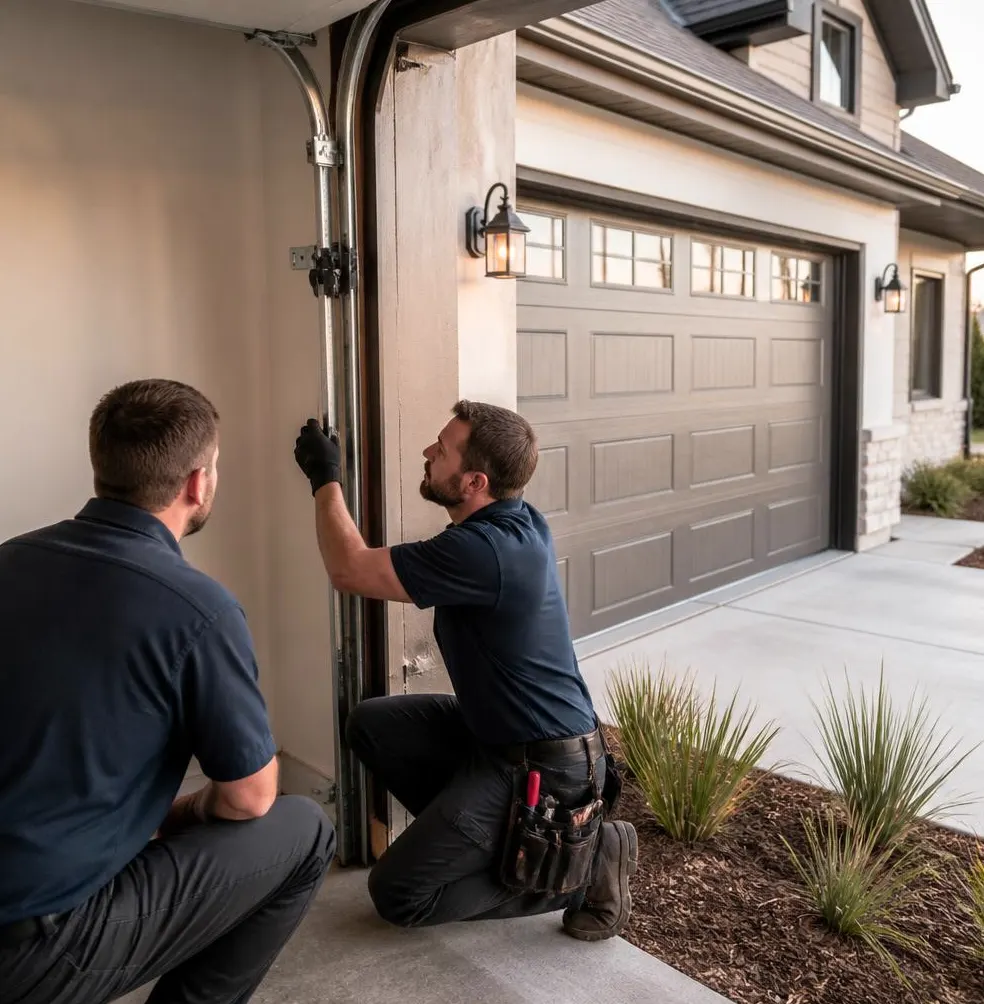
If you've gone through these checks and found cracked seals, rusted hardware, a door that won't stay balanced, or sensors that seem unreliable, it's worth having a technician look at it before the weather gets worse. Precision Garage Door of Agoura Hills handles garage door maintenance visits that cover weatherstripping, lubrication, hardware inspection, and opener testing in one trip, so you're not guessing at what's wearing out. If something's already failing, like a cracked spring or a track pulling away from the wall, our garage door repair technicians can diagnose it honestly and fix it the same visit in most cases.
Don't wait for a storm to find out your garage door isn't ready for it. Call Precision Garage Door of Agoura Hills today and get your door checked before winter settles in across Agoura Hills, CA.