
A Frustrating Problem That's More Common Than You Think
You press the button on your garage door remote, the door starts its descent, and then — just before it reaches the floor — it reverses and goes right back up. You try again. Same thing. Maybe it works on the third try, maybe it doesn't. If this scenario sounds familiar, you're not alone. This is one of the most common garage door complaints we hear from homeowners in Agoura Hills, and the good news is that it's almost always fixable.
The bad news? There are several possible causes, and some of them can be tricky to diagnose without experience. In this post, we'll walk you through the most likely reasons your garage door reverses before closing completely and help you figure out when it's a quick DIY fix versus when you should call a professional.
Understanding the Safety Reversal System
Before we get into specific causes, it helps to understand why your garage door is designed to reverse in the first place. Since 1993, federal law has required all garage door openers to include an auto-reverse safety mechanism. This system exists to prevent the heavy door — which can weigh anywhere from 130 to over 400 pounds — from closing on a person, pet, or object.
There are two primary components of this safety system:
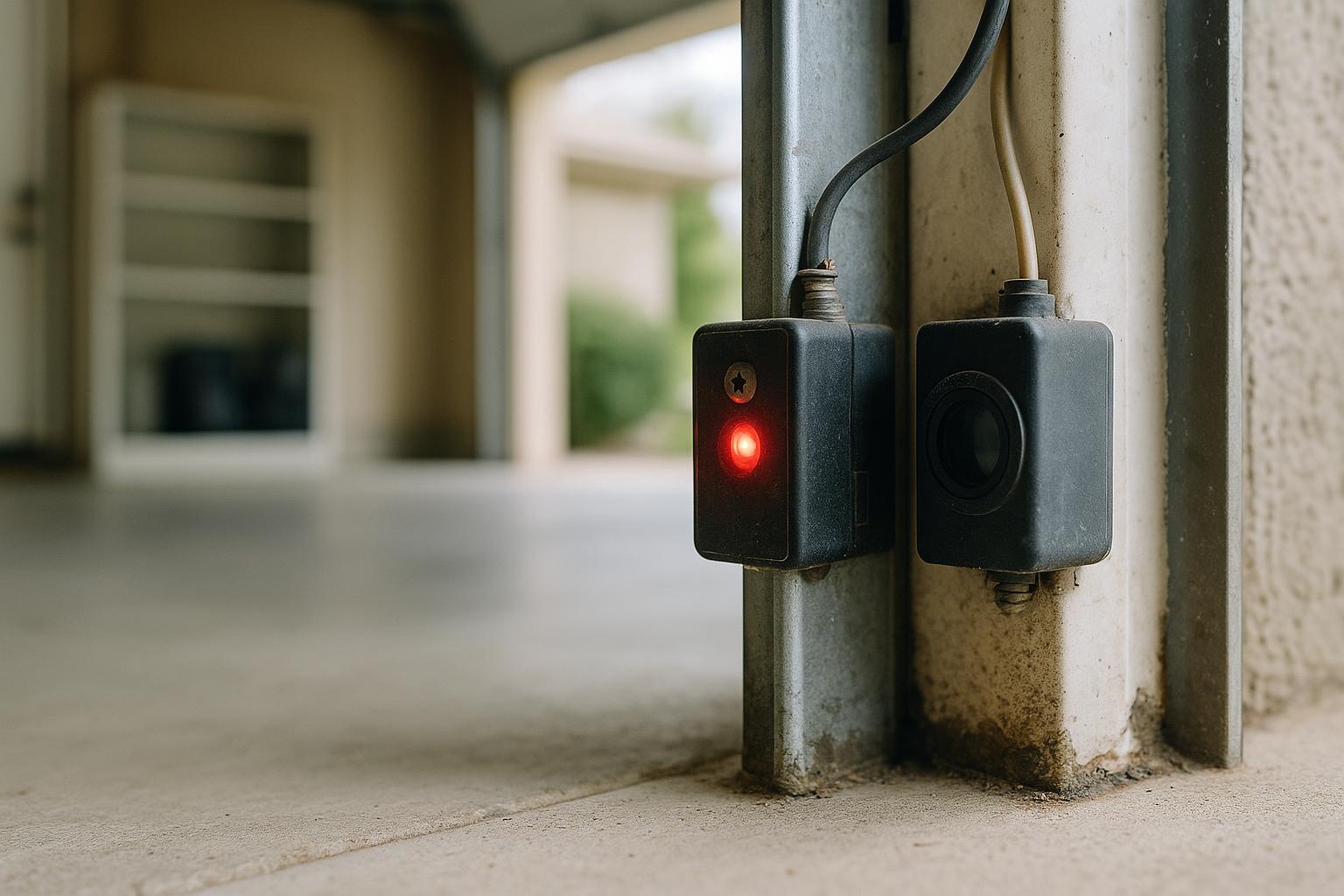
- Photo-eye sensors: These are the small sensors mounted near the floor on either side of your garage door opening. They project an invisible beam across the doorway. If anything breaks that beam while the door is closing, the door reverses.
- Mechanical auto-reverse: If the door encounters physical resistance while closing — like hitting an object on the ground — the opener's force settings tell it to reverse direction.
When your door reverses unexpectedly, one of these systems is usually being triggered, even if there's nothing actually in the way.
The Most Common Causes
1. Misaligned or Dirty Photo-Eye Sensors
This is the number one reason garage doors reverse before reaching the floor. The photo-eye sensors on either side of the door need to be perfectly aligned with each other to maintain their infrared beam. Over time, they can get bumped, shifted by vibration, or simply accumulate dirt, cobwebs, and dust that block the beam.
Here's what you can try:
- Gently wipe both sensor lenses with a soft cloth.
- Check that both sensors have a steady light (usually green). A blinking light typically indicates misalignment.
- Make sure nothing — a trash can, garden tool, or leaf — is blocking the beam path.
- Carefully adjust the sensor brackets so both units point directly at each other.
Many homeowners in Agoura Hills and surrounding areas like Calabasas and Westlake Village have lush landscaping near their garages. Overgrown plants and vines can easily interfere with sensor alignment without you realizing it.
2. Incorrect Close-Force Settings
Your garage door opener has adjustable force settings that control how much resistance the door should encounter before reversing. If the close-force setting is too low, the opener may interpret the normal weight of the door touching the ground as an obstruction and reverse.
Most openers have adjustment screws or dials — usually labeled "force" and "limit" — on the back or side of the motor unit. Increasing the close force slightly can sometimes solve the problem. However, be cautious: setting the force too high can defeat the safety mechanism, which creates a serious hazard. If you're unsure, it's best to have a technician handle this adjustment.
3. Misadjusted Travel Limits
The travel limit settings tell your opener exactly how far the door should travel in both the open and close directions. If the close-limit setting tells the door to travel farther than the actual distance to the ground, the opener thinks the door has hit something and reverses.
This issue often shows up after a new opener installation or when someone has recently adjusted the settings. It can also develop gradually as springs and cables stretch over time, subtly changing the door's travel characteristics.
4. Worn or Damaged Tracks
If your garage door tracks are bent, dented, or have accumulated debris, the door may bind or encounter resistance as it moves downward. The opener senses this resistance and triggers a reversal. Inspect the tracks on both sides of the door for visible damage, and clear out any dirt, leaves, or small objects that may have found their way inside.
5. Broken or Worn Springs and Cables
Your garage door's springs do the heavy lifting — literally. They counterbalance the weight of the door so the opener doesn't have to work as hard. When a spring is weakening or a cable is fraying, the door becomes heavier and harder to move. The opener may struggle to close the door fully and reverse as a result.
This is one cause you should never attempt to fix yourself. Garage door springs are under extreme tension and can cause serious injury if handled improperly. If you suspect a spring or cable issue, call a professional right away.
6. Weather-Related Issues
Southern California may not get harsh winters, but temperature swings in the Agoura Hills area — especially between hot afternoons and cool evenings — can cause metal tracks and components to expand and contract. This can temporarily affect door alignment and travel. Additionally, moisture and morning dew can cause minor rust or sticking in older track systems.
When to Call a Professional
Some of the fixes above — cleaning sensors, clearing debris from tracks, checking for obstructions — are perfectly safe for homeowners to handle. But if you've tried the basics and the door still reverses, or if you notice any of the following, it's time to bring in an expert:
- Visible damage to springs, cables, or drums
- The door is visibly crooked or sagging on one side
- Grinding, scraping, or popping noises during operation
- The opener motor runs but the door doesn't move
- You smell burning from the opener unit
Continuing to force a malfunctioning door to operate can turn a minor repair into a major one — or worse, create a safety hazard for your family.
Preventive Maintenance Makes a Difference
The best way to avoid unexpected garage door problems is with regular maintenance. A professional tune-up once or twice a year can catch worn parts, misaligned sensors, and lubrication issues before they turn into the kind of problem that leaves you stuck in your driveway on a Monday morning.
At Precision Garage Door of Agoura Hills, our maintenance service includes a full inspection of springs, cables, rollers, tracks, sensors, and opener performance. We serve homeowners throughout Agoura Hills, Thousand Oaks, Oak Park, Newbury Park, and the surrounding communities, and we're committed to honest assessments and fair pricing.
Don't Ignore a Reversing Garage Door
A garage door that won't close properly isn't just an inconvenience — it's a security vulnerability and a potential safety issue. Whether the fix turns out to be a simple sensor cleaning or a more involved repair, addressing the problem promptly protects your home and your family. If you've run through the troubleshooting steps in this guide and the issue persists, give us a call. We'll diagnose the problem, explain your options clearly, and get your door working the way it should.