
The Mistake: Picking the One That Looks Best in the Showroom
Most homeowners choose a garage door the same way they choose a front door: they stand in front of a sample panel, like the color and the grain pattern, and sign off. It is an understandable shortcut — a garage door is a big visual chunk of the house, and showroom lighting makes everything look premium. The problem is that a panel sample tells you nothing about how that material behaves after a few years of inland heat, dry Santa Ana wind carrying dust and the occasional wildfire smoke, and a winter of real rain. The material question matters more here than in milder, wetter climates, because the doors get more sun exposure and more temperature swing in a single day than most buyers expect.
Steel: The Default for a Reason
Steel is the standard choice for most production homes, and in this climate it earns that spot. It does not warp in heat, it resists the dry-season dust that scratches softer finishes, and a factory powder coat holds up well against UV. The trade-offs are weight and denting: steel panels (especially single-layer, non-insulated ones) can dent from a stray bike or basketball, and uninsulated steel transmits heat, which matters if the garage backs up to a living space during inland summer heat spikes. Insulated steel (a steel-polyurethane-steel sandwich) solves both issues at a moderate cost increase and is the most common upgrade we install.
Wood: Beautiful, High-Maintenance
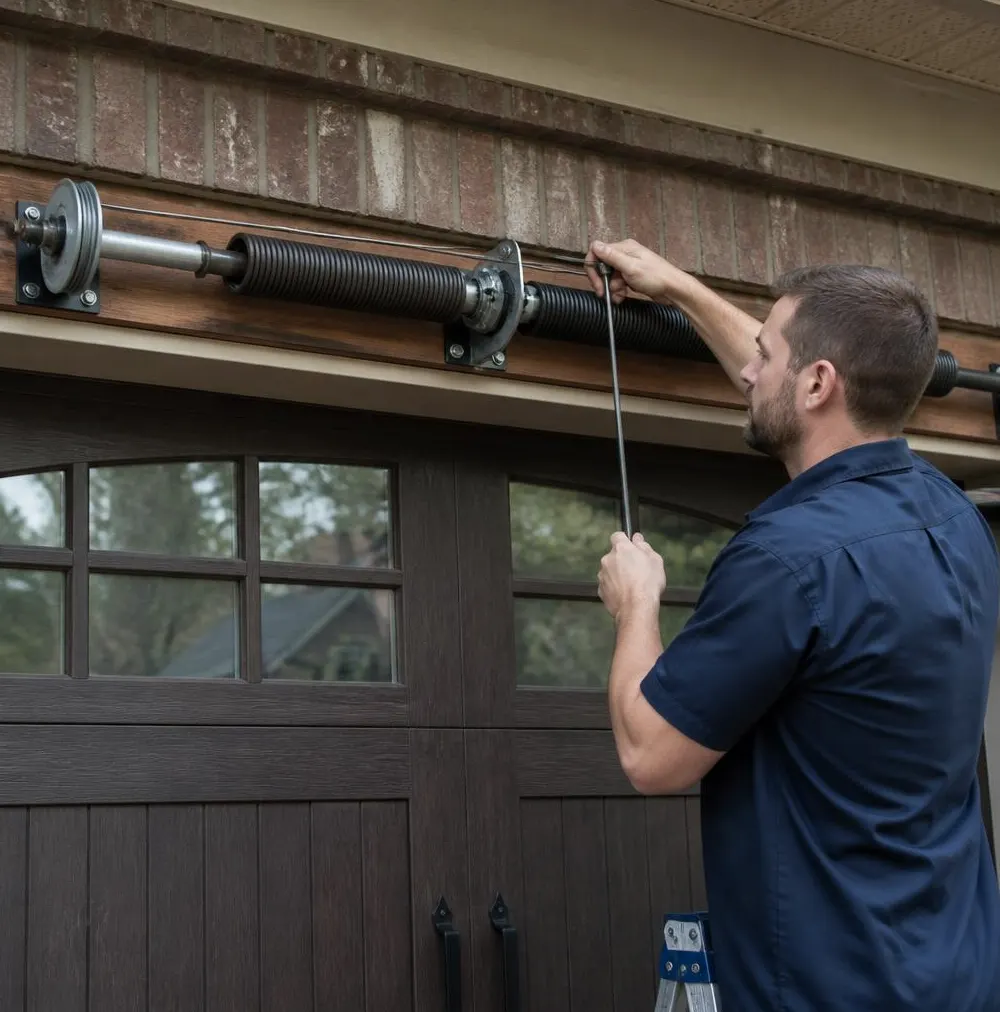
Real wood doors look the best, and nothing else quite matches a carriage-style wood door on a Craftsman or ranch home. But wood is the material least suited to the dry-season swings here. Low humidity plus direct sun pulls moisture out of the panels unevenly, which is exactly what causes cracking, checking, and warping at the seams. Wood also needs re-staining or re-sealing every couple of years to keep weather resistance intact; skip that maintenance for a season or two and you will see it. Wood is a good choice only for owners who genuinely want the upkeep ritual and are willing to budget for it.
Aluminum: Light, Rust-Proof, But Dent-Prone
Aluminum will never rust, which makes it a reasonable option for homes closer to the coast where salt air is a factor. It is also lighter than steel, which puts less strain on the opener, springs, and tracks over time — a small but real benefit during seismic shaking, since a lighter door moving on its tracks is less likely to jump them. The downside is that aluminum dents more easily than steel and shows those dents permanently, since it does not spring back the way heavier gauge steel can. It also tends to flex more in wind, which can matter on the more exposed canyon-adjacent properties.
Fiberglass: Coastal-Friendly but Limited
Fiberglass resists salt air and moisture well and can be molded to look like wood without the maintenance burden, making it a reasonable pick for coastal-facing homes. Its weakness is UV: lower-grade fiberglass panels can yellow or become brittle after years of strong, direct sun, and once that happens, repair options are limited compared to steel. It is a fine niche choice but not the strongest all-around performer for the hotter, drier inland parts of our service area.
Composite (Wood-Composite): The Low-Maintenance Wood Look
Composite doors use a wood-fiber composite skin over a steel or synthetic frame, giving you the look of real wood grain without the warping and cracking risk. They hold paint and stain well, resist moisture swings better than solid wood, and shrug off dust and minor impacts. The trade-off is upfront cost — composite doors sit at the higher end of the national price range for residential doors — but for homeowners who want a wood look without a recurring maintenance chore, it is often worth it.
Side-by-Side: What Matters Most in This Climate
- Best UV/dry-heat resistance: Steel (insulated) and composite
- Best for salt air near the coast: Aluminum and fiberglass
- Lowest maintenance: Steel and composite
- Best true wood look: Real wood (high upkeep) or composite (low upkeep)
- Lightest load on tracks/opener: Aluminum, then uninsulated steel
- Most dent-resistant: Insulated steel
Our Recommendation for Typical Homes in This Area
For most homes across Agoura Hills, Westlake Village, Thousand Oaks, Oak Park, and Newbury Park — where inland heat, dry dust, and occasional wildfire smoke are the bigger concerns — insulated steel is the most practical all-around choice. It handles sun and temperature swings without warping, resists dust-driven scratching with a good factory finish, and dents are repairable rather than a reason to replace a panel. If your home is closer to the coast toward Malibu, aluminum or fiberglass deserve a closer look for their rust resistance. If you want a genuine wood look without the re-staining schedule, composite is the upgrade worth the extra cost.
When to Call Precision Garage Door of Agoura Hills
If your current door is cracking, delaminating, or sagging at the corners, or if you are planning a replacement and want an honest read on which material actually fits your home's sun exposure and location, that is a conversation worth having before you buy. Precision Garage Door of Agoura Hills handles Garage Door Installation from material selection through final adjustment, and we also offer Garage Door Maintenance plans to keep whichever material you choose sealed, lubricated, and balanced through the dry season and into winter rain.
If you are weighing a replacement or just want a straight answer on what will hold up on your house, call Precision Garage Door of Agoura Hills and we'll walk the property with you before we recommend anything.