
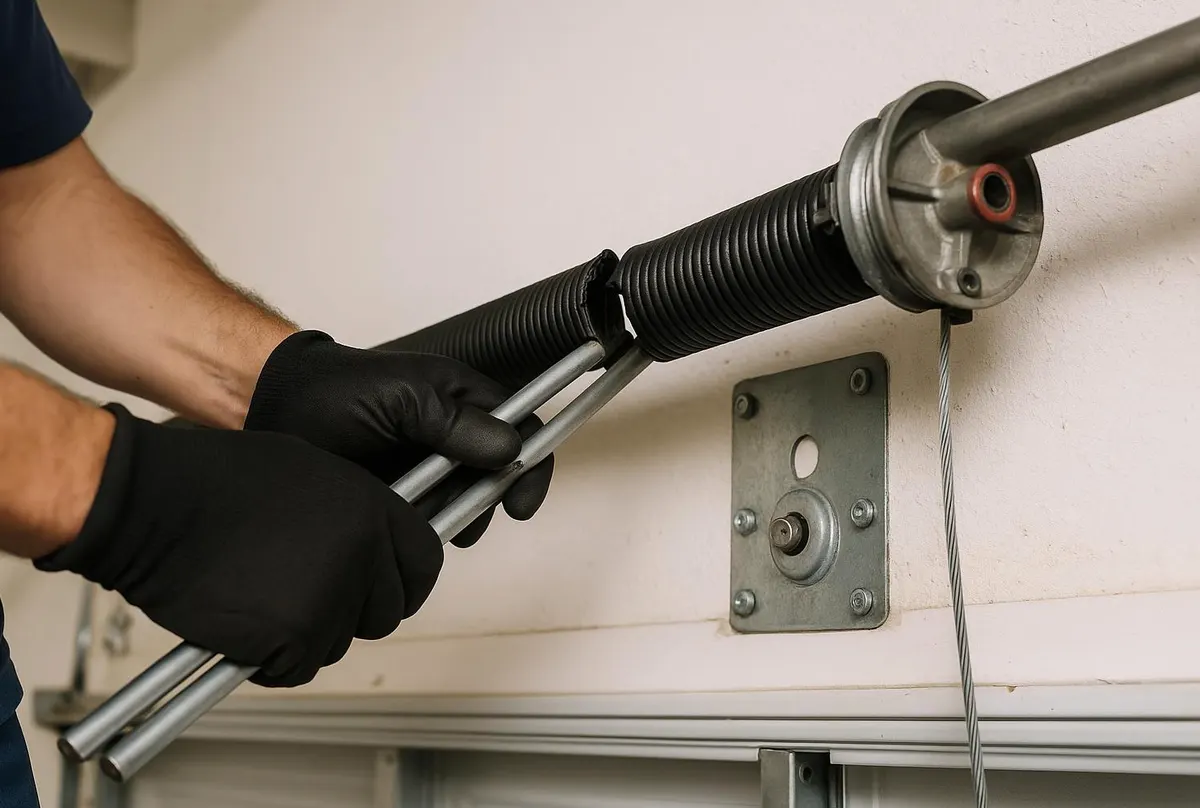
What a technician sees on this call
The call usually sounds the same: the bottom few inches of the garage door look rough, maybe bubbled paint or a reddish-brown stain, and the door is starting to bind or scrape when it opens. One spouse says it's just surface rust and a coat of paint will fix it. The other wants the whole door replaced. A technician shows up, runs a screwdriver along the bottom panel, and within thirty seconds knows which one is right.
This is a seasonal call. After a dry summer and fall with dust sitting on the door, the first real winter rain hits, water sits at the bottom edge, and whatever moisture problem was quietly developing finally shows itself.
Why this happens here
Garage doors in this area go through a hard cycle every year: a long dry stretch with dust and sometimes wildfire smoke residue, followed by winter rain that soaks into anything porous and sits in corners that don't drain well. Add in overnight condensation in an unheated garage, and the bottom 6 to 12 inches of a door takes more moisture abuse than the rest of it combined. Homes closer to the coast also pick up salt air, which speeds up metal corrosion even without direct rain contact.
Wood doors
Wood swells when it absorbs moisture and shrinks again as it dries out, and repeating that cycle every winter eventually breaks down the wood fibers. Signs it's past cosmetic:
- Panels that feel soft or spongy when you press on them, especially near the bottom
- Paint or stain that's cracking and lifting rather than just dirty
- A door that drags or sticks in damp weather but opens fine once it dries out
- Visible gaps opening up between panel sections
Surface graying or minor cracking in the finish is normal weathering and doesn't mean the door is failing. Soft wood underneath is a different story.
Steel doors
Steel doors rust where water sits and where the protective coating has been cut, scratched, or chipped, most often at the bottom corners, around hinges, and at any ding from a bike or trash can. Watch for:
- Surface rust that wipes or sands off, leaving solid metal underneath - cosmetic
- Rust that's flaking, bubbling, or has eaten through to a hole - structural
- Rust spreading along the bottom seam faster than anywhere else on the door, usually from a failed weatherstrip letting water sit against the metal
Hardware and tracks
Rust isn't only a panel problem. Springs, hinges, rollers, and track bolts that stay damp lose strength and start to bind or squeak. A spring with surface rust can still work, but pitted or flaking rust on a spring changes how it flexes and makes an unexpected break more likely, which is a different risk than a panel that just looks bad.
The quick test to settle the argument
Press firmly on the suspect area with your thumb or a flathead screwdriver. If it's solid and the rust is only on the surface, you're looking at a cleaning-and-repainting job. If it gives, flakes away, or the screwdriver sinks in even slightly, that section has lost structural integrity and patching the paint won't fix it.
Keeping it from coming back
- Clear debris out of the track and bottom seal before the first rain so water has somewhere to drain instead of pooling
- Replace a cracked or flattened bottom weatherstrip - it's inexpensive and it's the main barrier keeping rain off the bottom panel
- Repaint galvanized steel or touch up primer wherever the coating is scratched, before rust gets a foothold
- Skip the pressure washer on wood or painted steel doors; it drives water into seams and joints
When to call Precision Garage Door of Agoura Hills
If the push test shows soft wood, flaking rust, or a door that's binding more each week, that's worth a technician's eyes before it becomes a safety issue or a stuck door on a rainy morning. Our Garage Door Maintenance service checks seals, hardware, and drainage before the rainy season does damage, and our Garage Door Repair team can replace a rusted bottom panel or corroded hinges without replacing the whole door when the rest of it is sound. Call Precision Garage Door of Agoura Hills and we'll tell you straight which one you actually need.